Emergency Tree Removal
Tree Cabling & Bracing in Springfield, MO
Get a Free Estimate
Tree Cabling & Bracing Solutions
As ISA-certified arborists, our goal is to ensure the health and safety of your trees, while also providing you with the peace of mind that comes with knowing your property is well-maintained. One way we do so is through the use of tree cabling and bracing. These advanced support systems reduce stress on weakened areas and help trees survive and thrive in challenging urban environments.
If your tree is suffering from cracks in a major limb, weak branch unions, or uneven weight distribution, ask All About Trees about our tree cabling and bracing services in Springfield, MO. We’ll assess your tree and apply the right support system to protect your tree (and your property) for years to come.
Cabling, Bracing, and Other Structural Tree Support Services in Greater Springfield, MO
We provide professional tree cabling & bracing services throughout the Springfield, MO area, including the towns of Republic, Nixa, Willard, Rogersville, Ozark and Fair Grove.
Find Us

Cabling and Bracing
What Is Tree Cabling and Bracing?
Tree cabling and bracing are sophisticated support methods designed to provide structural integrity to trees with weak points or overextended branches. Specifically, they help distribute weight, reduce stress on critical sections, and prevent breaking branches.
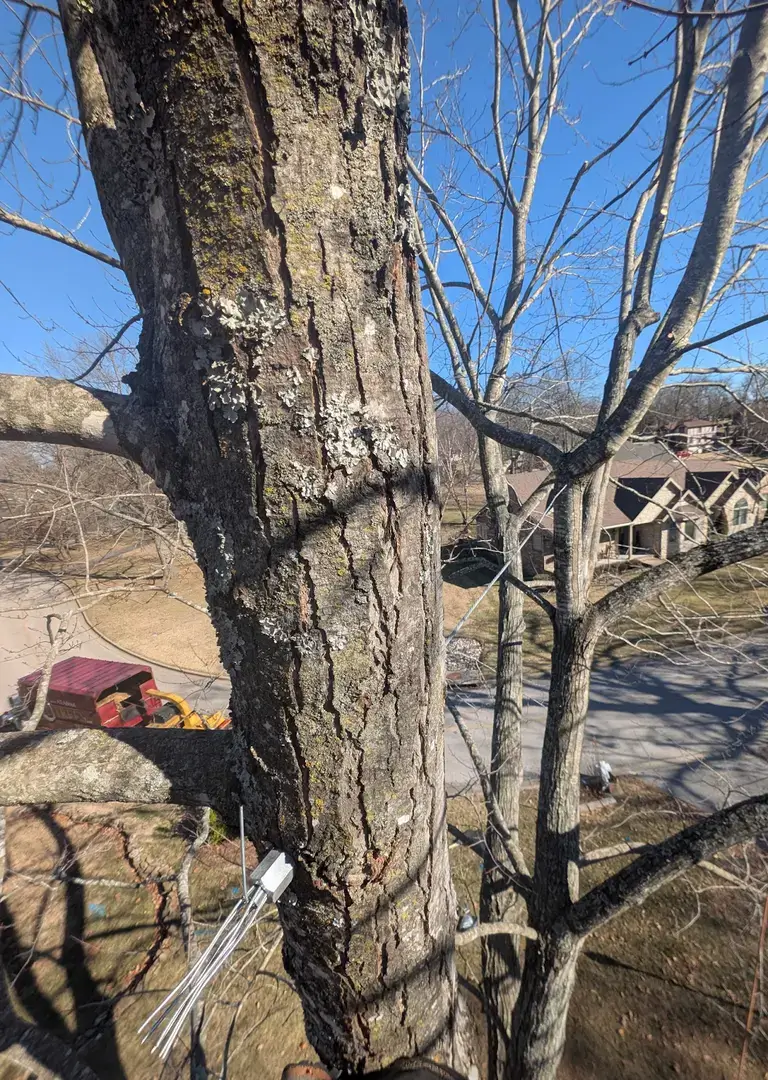
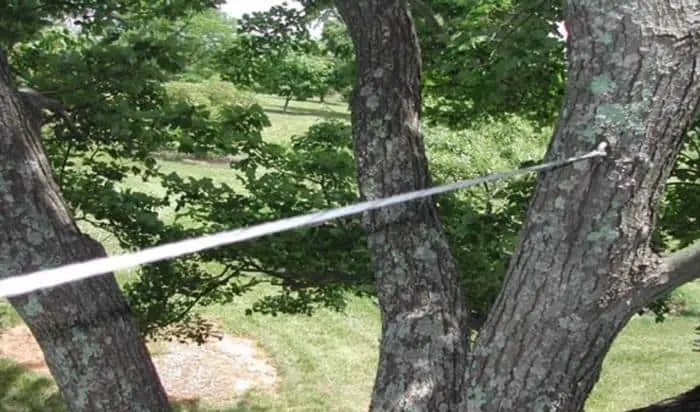
When we talk about tree cabling systems, we’re referring to flexible steel cables installed high in the tree’s canopy. These cables connect multiple branches to redistribute weight and reduce the risk of structural failure. Bracing, on the other hand, involves installing rigid support rods through weak or split branches, adding mechanical strength where natural growth might be compromised.
It’s important to note that cabling and bracing are temporary support measures designed to help trees develop stronger, more resilient structures. Most systems can remain in place for 5 to 10 years, with regular inspections to monitor their effectiveness and replace the cables or rods as necessary.
When Does a Tree Need Structural Support?
Urban environments create unique challenges for tree growth, with limited space, soil compaction, and environmental stressors impacting their development.
As a result, trees can develop structural vulnerabilities. Our tree cabling and bracing techniques address these challenges head-on so that homeowners and property owners don’t have to resort to tree removal.
In many of the following situations, we recommend tree bracing and cabling:
- Weak Branch Unions: Trees with “V-shaped” branch attachments are more prone to splitting than those with stronger, “U-shaped” unions. Bracing the tree can reduce the risk of breakage during strong winds or a storm.
- Multiple Leaders: Trees with two or more dominant stems (co-dominant leaders) often develop structural weaknesses where the trunks meet. Without support, these stems can separate over time.
- Visible Cracks or Splits: Cracks in the trunk or major limbs are clear indicators that a tree’s structural integrity has been compromised. Bracing can help stabilize these areas and prevent further damage.
- Heavy or Overextended Limbs: Large limbs that extend too far from the trunk can create uneven weight distribution. Cabling helps support these limbs.
- Storm Damage: Trees that have experienced previous storm damage may be weakened even if they appear stable. Reinforcement can help them recover and withstand future weather events.
- Leaning Trees: While some trees naturally lean, excessive or sudden leaning can signal instability. Support systems may be needed to prevent further shifting.
- Species-Specific Weaknesses: Certain species common to Southwest Missouri, such as Bradford pears or silver maples, are notorious for brittle wood and poor branch architecture. Proactive tree cabling can prevent the shattering effect often seen in these trees during winter ice accumulation.
Our Tree Cabling & Bracing Process
Every job begins with an on-site evaluation by an ISA-certified arborist, whether you’re calling us to help with storm damage tree care or have simply felt uneasy about the appearance of your tree. We will inspect the tree for decay, root health, and the degree of structural risk. If a tree is decayed, dying, or posing a safety risk, we will not recommend tree supports. However, if the tree has an otherwise good bill of health, we’ll design a customized plan based on the tree’s needs.
By mapping out potential weak points and measuring branch angles, we will determine the appropriate type, placement, and strength of materials required to provide optimal support. We will then install the cables and braces with surgical precision, ensuring minimal damage to the tree’s bark and natural growth patterns.
Once the work is complete, we’ll set you up on a routine maintenance schedule. As trees grow and change, adjustments to the tree supports may be needed. We will conduct follow-up inspections to make sure the system continues to perform effectively over time.
The Benefits of Professionally Installed Tree Supports
Investing in professional tree cabling and bracing offers a wide range of benefits, especially when compared to the alternative of tree removal.
- Preserve Mature Trees: Large, established trees are irreplaceable. Support systems allow you to retain their beauty, shade, and environmental benefits rather than removing them prematurely.
- Enhance Safety: By reinforcing weak areas, cabling and bracing significantly reduce the risk of falling limbs or tree failure, helping to protect your home, vehicles, and loved ones.
- Prevent Property Damage: A failing tree can cause extensive damage. Proactive support systems minimize this risk and provide peace of mind during storms.
- Extend Tree Lifespan: Structural support can add years or even decades to a tree’s life by reducing stress and preventing further deterioration.
- Maintain Property Value: Healthy, well-maintained trees enhance curb appeal and can increase property value.
- Environmentally Friendly Solution: Tree preservation supports local ecosystems, improves air quality, and contributes to a healthier environment overall.
It’s important to note that these benefits depend on proper installation and ongoing care. DIY solutions or improperly installed tree supports can do more harm than good, which is why working with experienced professionals like All About Trees in Springfield, MO, is essential.




Strengthen and Protect Your Trees Today
If you have a tree on your property that shows signs of structural weakness, you don’t have to assume removal is your only option. With the right support system, many trees can be safely preserved and enjoyed for years to come.
At All About Trees, we’re proud to provide trusted tree cabling and bracing services in Springfield, MO. Our ISA-certified arborists are here to evaluate your trees, recommend the best solutions, and deliver professional results you can rely on.
Connect with our team today to request a free estimate and learn how we can help strengthen, stabilize, and protect your trees for the future.